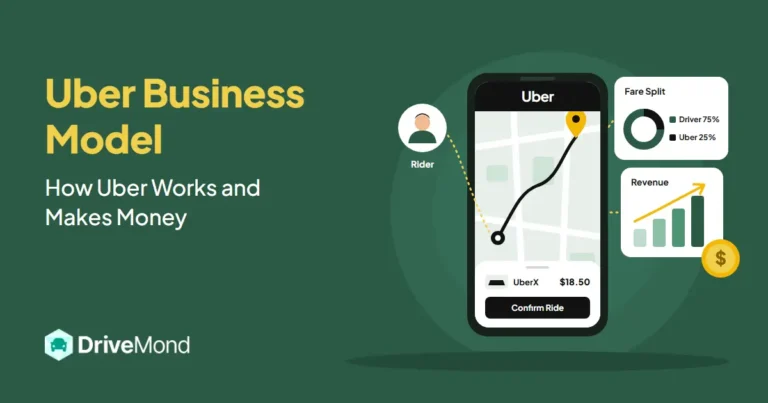
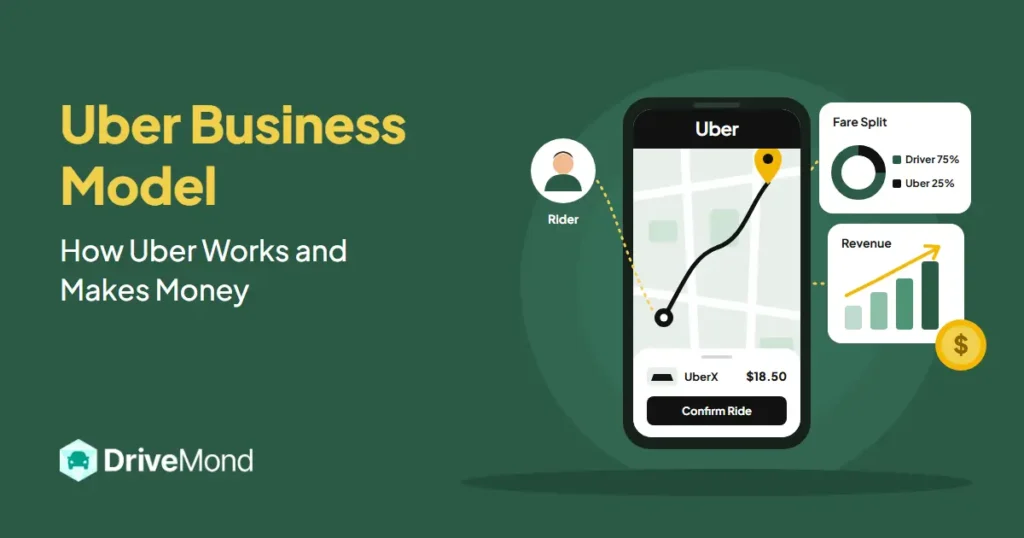
With a simple tap, a car arrives in minutes. It takes you across town, and $18 leaves your account before you shut the door.
Uber did not own the car or employ the driver. Yet it set the fare, matched riders with drivers, and took a cut of each trip. That is the core of the Uber business model. Uber runs a marketplace that connects riders with independent drivers and earns a share of the fares it helps generate.
Most guides on how Uber works stop at the business model canvas or jump straight to pitching an app. Neither explains how the model works during a real trip.
This guide follows a ride from request to payment, then breaks down Uber’s business model canvas, including its customers, partners, and costs. You’ll also learn where Uber earns revenue, which segments still lose money, and which parts of its model a new operator can replicate.
Key Takeaways
- Uber matches riders with nearby drivers and takes a cut of each fare without owning the cars.
- Most of Uber’s revenue is the gap between what the rider pays and what the driver takes home.
- Owning no vehicles shifts risk onto drivers rather than removing it from the model.
- Uber reports Mobility, Delivery, and Freight as separate segments, with Freight contributing the least revenue of the three.
- Uber’s edge is a dense local driver network and years of trip data, and a new rival needs time to build both.
- The technology is now the easy part of building a ride-hailing platform like Uber.
What Is the Uber Business Model?
The Uber business model connects riders who need a car with drivers who have one, then takes a share of each completed fare. Uber provides the app, matches riders with drivers, processes payments, sets prices, and enforces the rules that help strangers trust the service. It generally operates without owning vehicles or employing drivers as staff.
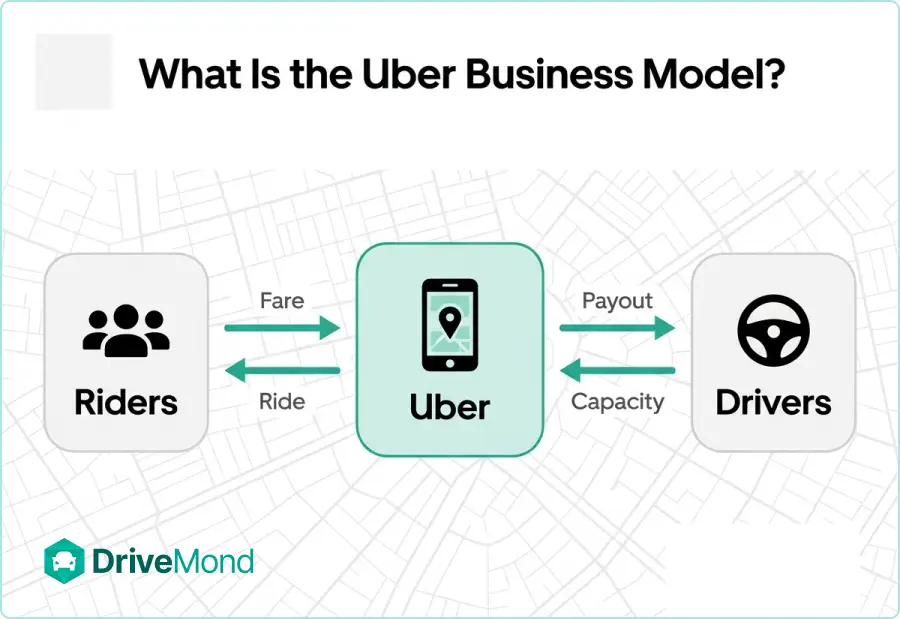
Two sides meet on the platform, and Uber sits between them.
- Riders pay for certainty.
- Drivers supply the capacity.
- Uber prices the match.
Most of the money that passes through Uber never stays there.
Users spent $193 billion across the platform in 2025, and Uber recorded $52.0 billion of that as revenue, per its fourth-quarter and full-year 2025 results.
The rest went to drivers, couriers, and merchants, as well as taxes and tolls. Uber must balance every pricing and payout decision to keep riders booking and drivers on the road.
Because drivers supply their own cars, Uber can scale with demand without buying a fleet upfront. Entering a new city costs far less than purchasing vehicles, with most early spending going toward attracting drivers and riders.
How does the Uber business model work?
Uber turns a tap into a completed trip through a sequence that runs entirely on the platform, with no dispatcher anywhere in it. Software decides who gets the trip, what it costs, and how the money settles.

A trip moves from request to payment, and Uber makes a business decision at every point along the way.
Registering an Account
Riders sign up with a phone number or email and add a payment method. Drivers follow a separate process, submitting their license, vehicle details, and other documents for Uber to review before they can accept trips.
Driver screening helps riders trust the service. Riders do not need to verify each driver themselves because Uber checks their eligibility before their first trip.
Setting Pickup and Drop-off
The app uses the rider’s phone location to suggest a pickup point. Riders can adjust the pin, enter an address, and set a destination. They can also add stops along the way.
Accurate pickup points reduce failed pickups. Drivers spend less time searching for riders and more time completing trips.
Requesting a Ride
Upfront pricing helps riders commit without watching a meter run. Riders choose a ride option and see the price before booking. According to Uber Help, the price may change if they add stops, the route or trip time changes significantly, or the driver passes an unexpected toll.
Matching a Driver
Batch matching can reduce wait times across an area. Uber briefly groups nearby ride requests and available drivers, then matches them, according to Uber’s matching page. It also avoids matching riders and drivers who have rated each other one star.
Reaching Pickup
If a driver declines, the offer goes to the next one and the rider never sees it. Those waiting minutes are the real product, and they decide whether the app gets opened again.
Completing the Ride
The app records the route and trip duration as the ride progresses.
Trip records help resolve fare disputes. Support teams can review the logged route and trip time instead of relying only on the rider’s or driver’s account, reducing the time spent investigating complaints.
Paying and Rating
The card is charged automatically, and Uber’s cut comes out at the end. Both sides then rate each other, and those scores decide who stays on the platform. No supervisors needed.
All of it depends on density. Enough drivers nearby turns a request into a short wait. A thin network turns the same request into a long one, no matter how good the software is.
The business model canvas puts each of these parts on one page, along with the customers, partners, and costs behind them.
Uber Business Model Canvas
The business model canvas maps a company on one page using nine blocks. Those blocks cover who it serves, what it delivers, what it needs to operate, and what it earns. Uber is the example most strategy courses reach for, because every block is visible from outside the company.
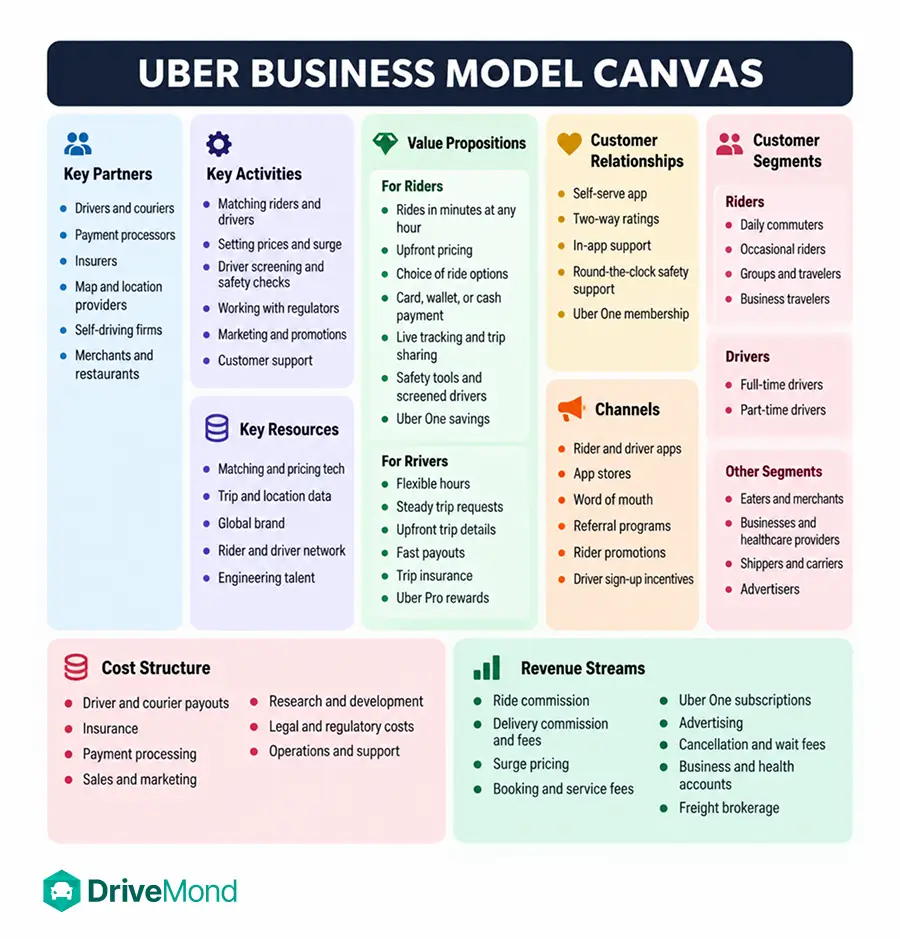
Nine blocks sound like a lot until you group them. Who Uber serves, how it reaches them, what it takes to run, and where the money lands.
Uber Customer Segments and Value Proposition
Uber serves two groups that depend on each other. If it favors one at the other’s expense, the marketplace can break down. The business model canvas captures this relationship in two parts, starting with the customer segments Uber serves.
Uber Customer Segments
Uber’s core ride-hailing business serves riders and drivers. Its other services bring additional customer groups into the business.
- Riders: People who need a car for a trip, from daily commuters to occasional users.
- Drivers: Full-time drivers who rely on Uber for income and part-time drivers who work around other commitments.
- Other segments: Eaters, couriers, merchants, businesses, shippers, carriers, and advertisers, which we cover in the segments section.
Uber Value Propositions for Riders and Drivers
Uber’s two-sided marketplace brings riders and drivers onto the same platform for different reasons. Riders want a quick, reliable trip, while drivers want a steady flow of bookings and flexibility over when they work.
For riders
| Value proposition | What it means |
| On-demand rides | A car at the tap of a button, at any hour, with no need to call ahead |
| Scheduled rides | Uber Reserve lets riders book a trip in advance |
| Upfront pricing | The fare is shown before booking, so there is no meter to watch |
| Ride options | A choice of everyday, comfort, shared, or premium rides, depending on the city |
| Multiple stops | Riders can add extra stops to one trip instead of booking several |
| Flexible payment | Card, digital wallet, or cash in markets where Uber allows it |
| Split fares | Riders traveling together can share the cost in the app |
| Live tracking | Riders follow the route on the map and can share their live trip with friends or family |
| Screened drivers | Drivers pass safety checks before their first trip and again over time |
| Safety tools | Emergency button, trip sharing, PIN verification, RideCheck, and audio recording |
| Women Preferences | Women riders can set a preference for a woman driver in several countries |
| Accessibility options | Wheelchair-accessible rides, assisted rides, and screen reader support where available |
| Round-the-clock support | Help is available day or night for trip issues or safety concerns |
| Membership savings | Uber One gives discounts on rides and deliveries for a monthly or annual fee |
For drivers
| Value proposition | What it means |
| Flexible hours | Drivers go online and offline whenever they choose |
| Steady demand | Trip requests come to them without searching for passengers |
| Upfront trip details | Earnings and destination are shown before accepting a trip |
| Trip Radar | Drivers can see nearby trip requests and pick one that suits them |
| Destination preference | Drivers can get trips heading toward a place they set, such as home |
| More ways to earn | Drivers can take rides, deliveries, or both from the same platform |
| Fast payouts | Earnings can be cashed out soon after trips in many markets |
| Rewards program | Uber Pro gives perks and rewards to high-performing drivers |
| Trip insurance | Coverage applies while a driver is on a trip, with terms that vary by region |
| Safety tools | Emergency button, RideCheck, audio recording, and rider PIN verification |
| Women Rider Preference | Women drivers can choose to receive requests only from women riders |
| Two-way ratings | Drivers rate riders too, and riders with low ratings can lose access |
| Accessibility features | Deaf or hard-of-hearing drivers can turn on tools that ease rider communication |
Uber must set fares and driver pay to keep both sides using the platform. Every pricing change shifts the balance between rider demand and driver supply.
- Lower fares can attract more riders, but drivers earn less per trip and may log off.
- Higher driver pay can keep more drivers online, but it can also push fares up and reduce bookings.
- Too few available drivers mean longer waits. Riders may switch to other apps even when fares are competitive.
This balance also shapes Uber’s relationship with drivers. Uber classifies drivers as independent contractors in many markets, but courts and regulators in several countries have challenged that classification.
Uber Channels and Customer Relationships
Uber reaches and supports both riders and drivers through its apps. Most users can find a ride, book a trip, and get help without speaking to anyone.
Uber Channels
Word of mouth helps Uber attract users, but the company also spends heavily to grow. Riders discover the app through app stores, referrals, and friends. Some drivers sign up after trying the service as riders.
Uber supplements that organic growth with paid incentives for both sides of the marketplace.
- Rider promotions: First-ride discounts, coupons, and targeted offers.
- Referral programs: Rewards for riders and drivers who bring in new users.
- Driver incentives: Sign-up bonuses and earnings guarantees to attract drivers in new or busy markets.
Uber Customer Relationships
Most rider and driver interactions happen through the app, with support teams stepping in when problems arise.
- Riders book, pay, and pull receipts without help
- Drivers track earnings and withdraw without asking
- Human support sits behind the app in tiers
A person only steps in once something has gone wrong. Ratings handle everyone else, setting the standard for millions of people Uber never speaks to.
Uber Key Resources, Activities, and Partners
Uber owns almost nothing a rider touches. What it does own and what it rents are worth looking at separately.
Uber Key Resources
Uber’s most valuable assets are digital and network-based rather than physical.
- The matching and pricing technology
- More than a decade of trip and location data
- A brand people recognize worldwide
- A large, active network of riders and drivers
Engineers and map licenses can be hired or purchased. Years of trip data and a dense local network take much longer to build.
Uber Key Partners
Drivers are the partners that make the model run, supplying the cars, fuel, and hours. In the second quarter of 2026, a record 10.2 million drivers and couriers earned more than $25 billion on the platform, per Uber’s Q2 2026 prepared remarks.
That is the largest number in the model, and it never appears as an Uber asset.
Payment processors, insurers, and map providers fill the rest, each one a contract rather than a department.
Uber Key Activities
Uber’s daily work happens in thousands of separate local markets.
- Matching supply to demand as both move through the day
- Setting prices that keep riders booking and drivers online
- Running safety checks and driver verification
- Arguing its case with regulators almost everywhere it operates
Regulatory compliance is one of Uber’s most important ongoing activities. Local rules determine whether Uber can operate in a city and what requirements it must meet.
Uber Cost Structure and Revenue Streams
Most of what Uber earns leaves again almost immediately. The money side of the canvas is really about how little stays.
Uber Cost Structure
Cost of revenue was Uber’s largest expense in 2025, reaching $31.3 billion, or close to 60 cents of every dollar it earned, according to its full-year results. It includes driver and courier payments in markets where Uber bears those costs, along with insurance and payment processing.
Insurance is a key cost to watch. Every trip carries liability exposure, so insurance costs can rise as trip volume grows.
Uber’s 2025 operating expenses also included sales and marketing, along with other costs such as support.
| Expense | 2025 amount | What it covers |
| Sales and marketing | $4.9 billion | Rider promotions, driver incentives, and advertising |
| Research and development | $3.4 billion | The apps, matching, mapping, and payments technology |
| General and administrative | $3.2 billion | Corporate teams, legal costs, and regulatory work |
| Operations and support | $2.9 billion | Driver onboarding, verification, and customer support |
Sources: Uber 2025 Form 10-K
Uber Revenue streams
Uber earns service fees from rides and deliveries, then adds revenue from other sources. Subscriptions, freight brokerage, and advertising supplement its core fees. The next section explains how each stream works.
Also Read: 7 Best Ride Sharing Apps of 2026
How Uber Makes Money
Uber makes most of its money by taking a share of every ride and delivery booked through its platform. It also earns from fees, subscriptions, advertising, business accounts, and freight. Some revenue streams grow with each trip, while others generate income without requiring a ride or delivery booking.
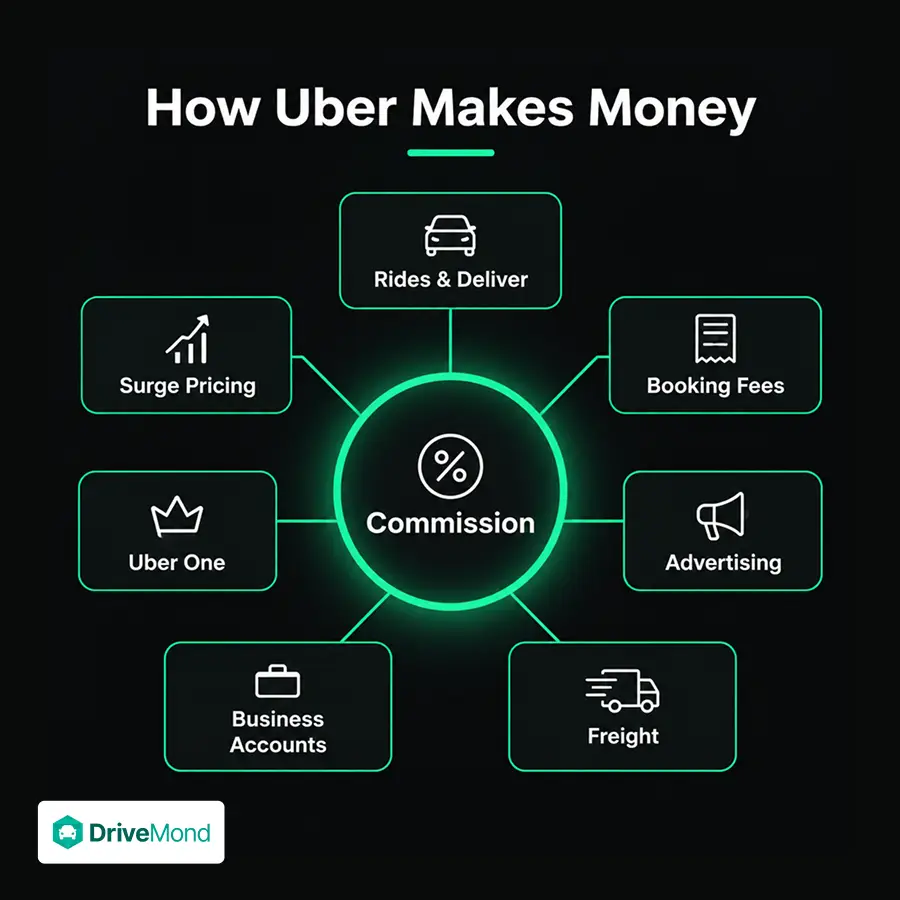
The following revenue streams start with Uber’s core commissions and cover the services that support its broader business.
Uber Ride Commission (Take Rate)
Uber keeps a portion of each fare and passes the rest to the driver. This portion is called the take rate, which Uber reports as its revenue margin.
- Gross bookings: What riders pay in total, including taxes, tolls, and fees.
- Revenue: What Uber records once drivers and merchants have been paid.
Divide revenue by gross bookings to calculate the take rate. In the second quarter of 2026, Uber generated $7.36 billion in Mobility revenue from $28.99 billion in gross bookings, giving it a take rate of about 25%, according to its Q2 2026 results.
However, a change in how Uber records UK driver payments reduced the reported margin by roughly four percentage points. Adjusting for this change puts the underlying take rate closer to 29%, according to its Q2 2026 prepared remarks.
Run the $18 fare through that, and the split comes out roughly like this:
- Around $4.50 recorded as Uber revenue
- The rest paid out to the driver, plus taxes and fees
That percentage looks small next to the fare. Multiply it by 3.9 billion trips a quarter, and it is the whole company.
Uber Eats Commission and Delivery Fees
Uber Eats earns revenue from both restaurants and customers on each order. It charges restaurants and stores a commission, while customers pay delivery and service fees.
Its take rate is lower than Mobility’s, at about 19% of gross bookings in the second quarter of 2026. This is partly because Uber must pay both the merchant and the courier for each order, according to the same Q2 2026 results.
Uber Surge Pricing
Surge pricing increases fares when rider demand exceeds available drivers. Uber keeps the same percentage of each fare, but a higher fare means more revenue per trip.
Higher prices encourage more drivers to move into busy areas, while some riders wait for fares to drop. This helps bring supply and demand back into balance. Without surge pricing, riders during peak hours could face longer waits or struggle to find a ride, according to Uber’s surge pricing page.
Uber Booking and Service Fees
In many markets, Uber adds a fixed booking or service fee to each trip on top of the fare. This fee appears separately in the price breakdown and helps cover safety programs, insurance, and app operations.
The amount varies by city and ride type. Because it applies even to short trips, it provides Uber with a minimum amount of revenue beyond its share of the fare.
Uber One Subscription
Uber One generates recurring revenue through monthly and annual membership fees, even when members do not book a trip or place an order. In return, members get discounts and reduced fees on eligible rides and deliveries. Subscription prices vary by market.
Uber One surpassed 50 million members in the first quarter of 2026. Members also accounted for half of all Mobility and Delivery gross bookings, according to Uber’s Q1 2026 results. They tend to order more frequently and remain active longer, making their overall spending more valuable to Uber than the membership fee alone.
Uber Advertising
Uber sells advertising space within its apps to brands that want to reach active customers. Formats include Journey Ads displayed during rides and sponsored listings on Uber Eats.
Advertising passed a $2.5 billion annualized run rate in the second quarter of 2026, per that quarter’s prepared remarks. CEO Dara Khosrowshahi described advertising as a high-margin business because it generates revenue without requiring additional drivers or couriers.
Uber’s advantage is its customer data. It knows where riders are going and what customers order, allowing brands to target ads based on travel patterns and purchasing behavior.
Uber Cancellation and Wait Time Fees
Uber also earns a share of fees charged when riders cancel late or keep drivers waiting beyond the allowed time. Most of the fee goes to the driver. For example, a typical $5 UberX cancellation fee in the US left the driver with $3.75 after Uber’s 25% cut, according to The Rideshare Guy. These fees add up across billions of trips, giving Uber extra revenue while paying drivers for lost time.
Uber also earns revenue from businesses and healthcare providers that arrange rides and meals for others through Uber for Business and Uber Health. Its freight business, Uber Freight, takes a share of each load it matches between shippers and carriers. These services operate within Uber’s broader business segments, which the next section covers.
What Are Uber’s Business Segments?
Uber reports its results across three segments: Mobility, Delivery, and Freight. Uber for Business and Uber Health operate across these segments, offering rides and deliveries to organizations rather than individual customers.
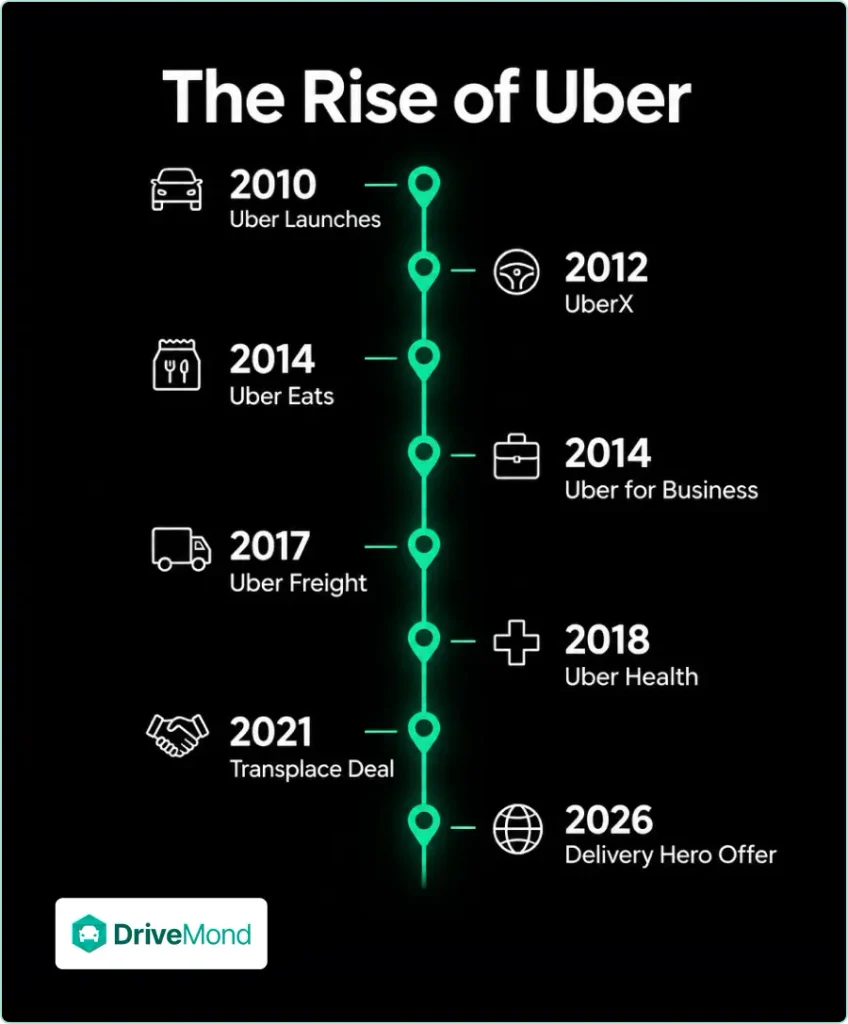
Each segment entered Uber’s business at a different point in its history and serves a different customer group, as the following sections explain.
Uber Mobility (Ride-Hailing)
Mobility is Uber’s original business and remains its most profitable segment. The company launched in San Francisco in 2010 as a black car service. In 2012, it introduced UberX, allowing everyday drivers to offer rides in their own cars.
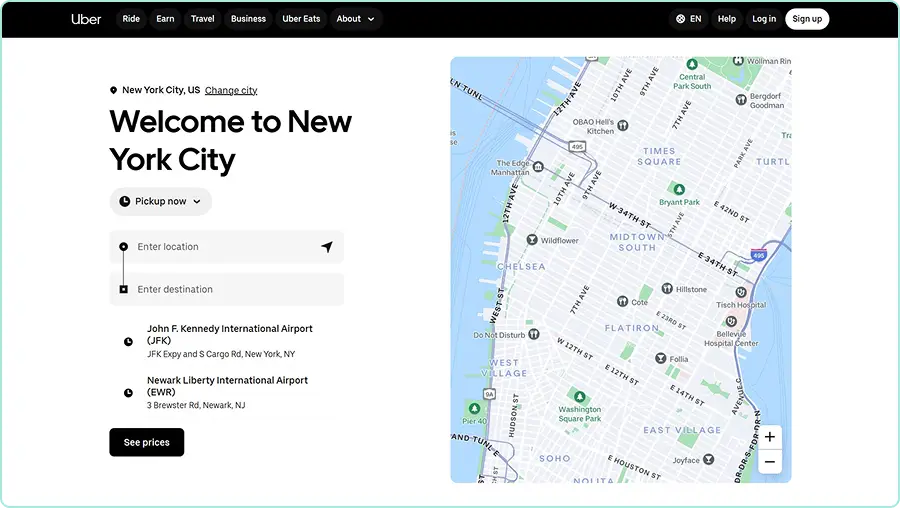
This shift made Uber more accessible to a wider audience and helped build the driver network that supports its broader business today.
Today, Mobility offers several ride options to suit different needs and budgets.
- UberX: Everyday rides in standard cars and the most commonly used option.
- Uber Comfort: Rides in newer cars with extra legroom and highly rated drivers.
- UberXL: Larger vehicles for groups and passengers with extra luggage.
- Uber Black: Premium rides in high-end vehicles with professional drivers.
- UberX Share: Shared rides with other passengers heading in the same direction at a lower fare.
- Uber Green: Rides in electric or hybrid vehicles, where available.
- Uber Reserve: Rides booked in advance for airports, meetings, and events.
Mobility operates in more than 70 countries, with ride options varying by city. In the second quarter of 2026, the segment generated $2.2 billion in operating income, according to Uber’s Q2 2026 Form 10-Q.
Uber Eats (Delivery)
Uber Eats started as a lunch delivery experiment within the ride-hailing app. Uber first tested food delivery as UberFRESH in Los Angeles in 2014, then launched Uber Eats as a standalone app in Toronto in 2015, according to Uber. The idea was to use Uber’s existing driver network to deliver food as well as transport passengers.
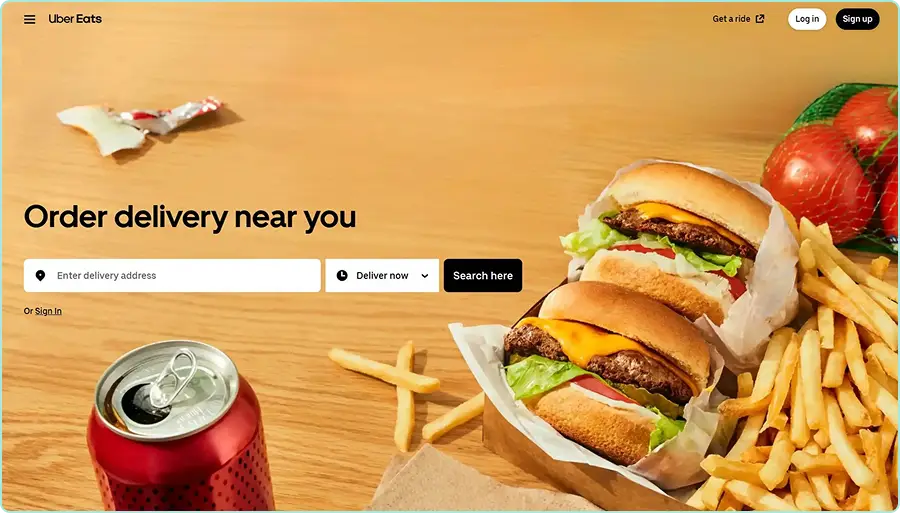
Uber Eats now covers more than restaurant meals, with several services built around its delivery network.
- Restaurant delivery: The original service, now also offering pickup orders.
- Grocery and retail: Deliveries from supermarkets, convenience stores, pharmacies, and other retailers.
- Postmates: A US delivery app Uber acquired in 2020, now operating on the same delivery network.
- Uber Direct: Delivery for businesses that receive orders through their own apps and websites.
- Uber Connect: Same-day package delivery between individuals using Uber couriers.
Uber Eats works with more than 1.5 million merchants across over 11,000 cities, according to Uber. In the second quarter of 2026, Delivery gross bookings reached $27.5 billion, while the segment generated about $1.06 billion in operating income, according to the same 10-Q.
Delivery also keeps couriers active when demand for rides slows, while Uber runs much of its advertising business through Eats. In July 2026, Uber agreed to acquire Delivery Hero in a $14.8 billion deal that would expand its combined operations to 99 countries, according to Reuters.
Uber Freight
Uber Freight applies Uber’s matching model to trucking. Launched in 2017, it connects shippers who need to move goods with carriers who have trucks and drivers. Before digital freight platforms, finding a truck often required hours of phone calls. Uber aimed to simplify the process by making load booking as easy as booking a ride.
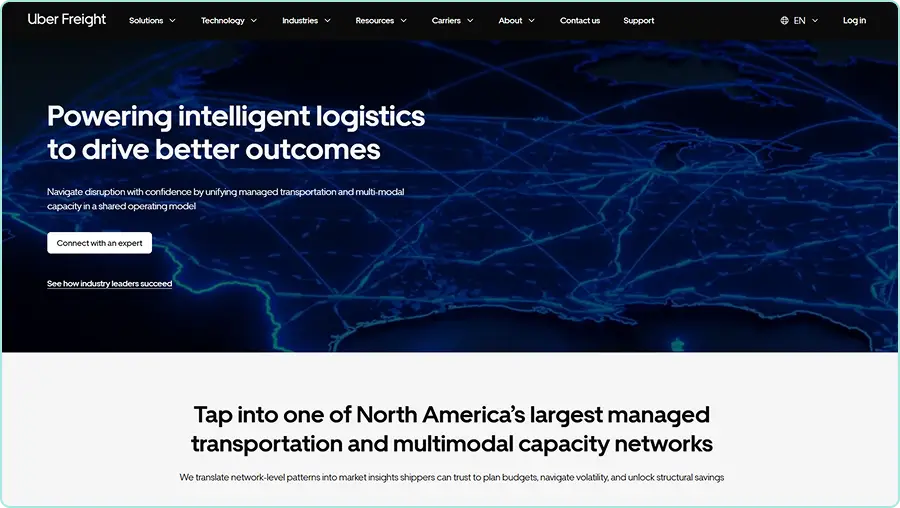
Uber Freight serves both sides of the trucking market.
- Shippers: Businesses, from small companies to Fortune 500 firms, that need goods transported.
- Carriers: Trucking companies and independent owner-operators looking for loads to fill their trucks.
In 2021, Uber Freight acquired Transplace, adding transportation management software and services for large shippers. The business operates mainly in North America.
Freight is also the segment where Uber’s matching model faces the greatest challenges. Gross bookings reached $1.57 billion in the second quarter of 2026, up 25% year over year, but the segment still reported a $24 million operating loss, according to the same 10-Q.
Freight brokers already operate on thin margins, and shippers planning loads days rarely need an instant match. This makes speed, one of Uber’s biggest advantages in ride-hailing, far less valuable in freight.
Uber for Business
Uber for Business offers rides and meals to companies rather than individual customers. Uber launched the service in the US and Canada in July 2014, then expanded it to all 45 countries where Uber operated by September that year. The service gave companies a simpler way to manage employee travel expenses without collecting and processing individual receipts.
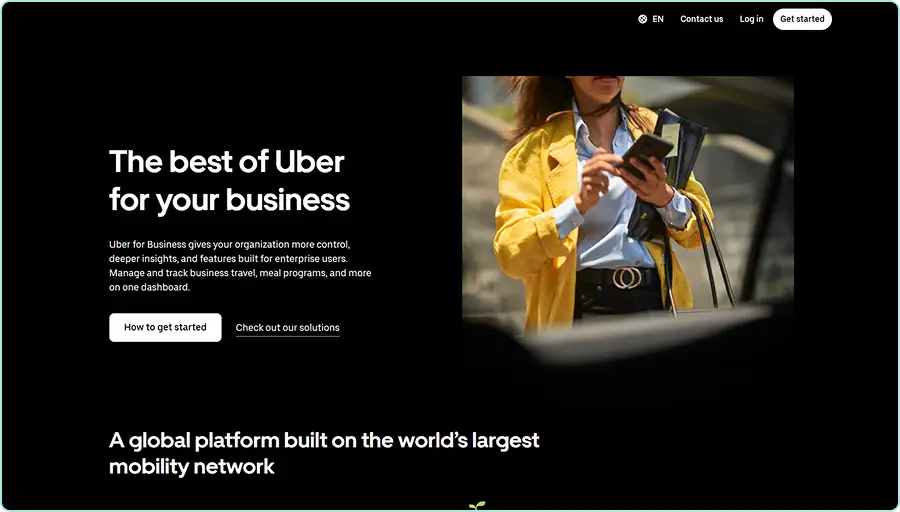
Companies can manage several services through one central account.
- Employee travel: Staff charge work-related rides directly to the company account.
- Meal programs: Teams order through Uber Eats within company-set budgets.
- Guest rides: Companies arrange trips for clients, job candidates, and visitors.
- Vouchers: Businesses provide ride or meal credits to employees and customers.
Rides cost the same as they do on the regular Uber app, and each trip automatically appears in the company’s expense reports. Uber for Business bookings grew more than 40% year over year in the second quarter of 2026, according to Uber’s Q2 2026 prepared remarks.
Business accounts give Uber steady weekday demand, helping balance the evening and weekend peaks in consumer rides. Once a company connects Uber to its expense system and sets its travel policies, switching providers requires setting everything up again. This makes companies less likely to leave over small price differences.
Uber Health
Uber Health helps healthcare providers arrange rides for patients traveling to medical appointments. Uber launched the service in March 2018 after identifying unreliable transportation as a common reason patients missed appointments.
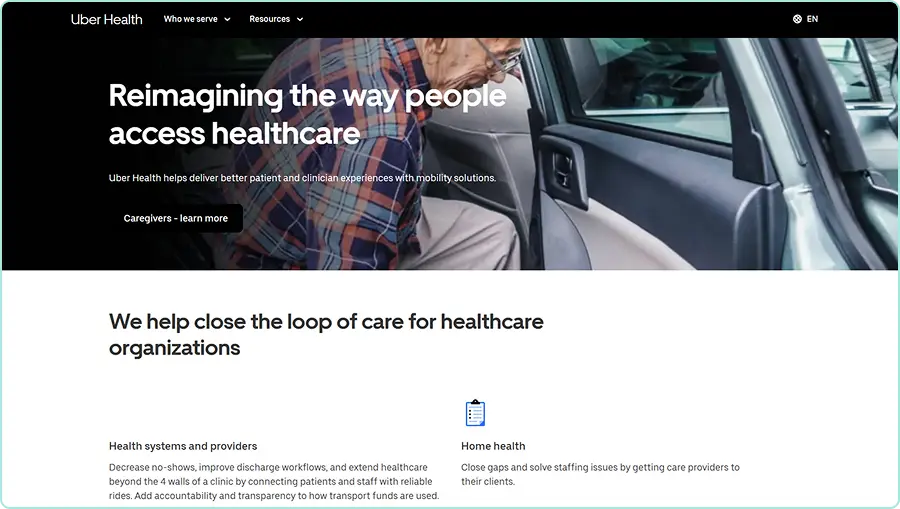
Hospitals, clinics, and other healthcare providers use Uber Health for several services.
- Patient rides: Staff arrange non-emergency trips to and from medical appointments.
- No app needed: Patients receive ride details by text or phone call, so they do not need a smartphone or Uber account.
- Prescription delivery: Participating providers can arrange medication delivery to patients’ homes in supported areas.
- Caregiver trips: Providers arrange rides for home health workers traveling to patients who need care.
The healthcare provider or health plan pays for the ride, not the patient. Uber Health is also designed to meet US healthcare privacy requirements, so the service operates mainly in the US. Uber Health continued to grow in the second quarter of 2026, according to the same prepared remarks.
Uber Health follows a similar model to Uber for Business. An organization pays for rides on someone else’s behalf, and once a clinic integrates Uber into its patient transport workflow, it has little reason to switch providers.
Understanding how each segment generates revenue and where it faces challenges helps show which parts of Uber’s business model a new operator can realistically replicate.
What Founders Can Learn From the Uber Business Model
A new ride-hailing business cannot replicate everything Uber has built. Some parts of its model work for smaller operators, while others require years and significant investment to develop. Knowing the difference helps you build a realistic launch plan.
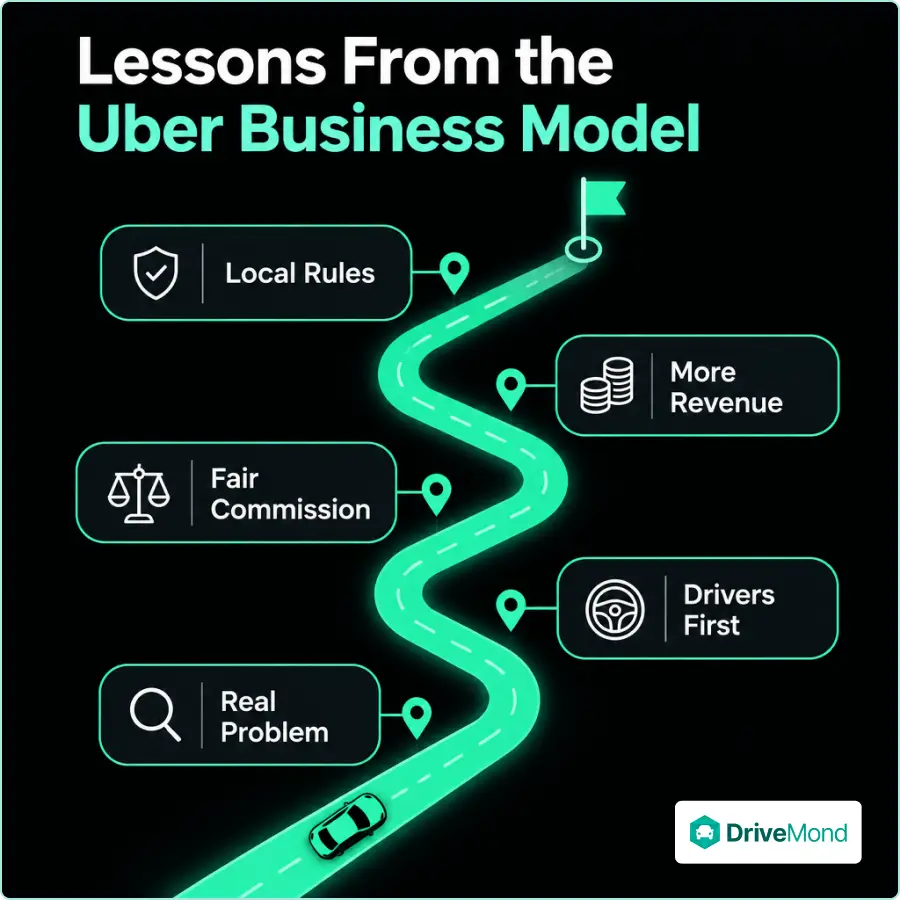
The lessons below focus on the parts of Uber’s business model that a new platform owner can apply from day one.
Start With a Problem Riders Already Have
A ride-hailing app needs to solve a problem that riders already feel. When Uber launched, getting a cab often meant waiting on a street corner without knowing the fare or arrival time. Its app addressed both frustrations, giving riders a clear reason to try the service.
Before building the app, look for clear signs that riders have a problem worth solving.
- Riders regularly wait too long for a taxi or car.
- Fares are unclear or vary between drivers.
- People rely on phone calls or chat groups to arrange rides.
If riders are satisfied with their current options, they have little reason to switch to a new platform.
Get Drivers on the App Before Riders
Riders rarely return to an app with no available drivers. Uber addressed this by building driver supply before demand in each new city. During early launches, it paid drivers $30 an hour to stay online, even when trips were slow. This ensured riders could find nearby cars. Scott Gorlick, one of Uber’s first 100 employees, shared this tactic on X.
A new platform can apply the same approach on a smaller budget.
- Sign up drivers before launching the rider app.
- Guarantee minimum earnings for early drivers during a set period.
- Start in a small service area so drivers stay close to potential riders.
Set a Commission That Drivers Find Fair
Drivers accept Uber’s commission because the platform connects them with work they might not find on their own. In return, they get a steady flow of trip requests, payment processing, and support.
When setting commission rates, consider what drivers receive in return.
- Rates that are too high may push drivers to competing apps.
- Rates that are too low may not cover marketing and support costs.
- A clear breakdown of what the commission covers helps build driver trust.
Add Revenue Beyond Trip Commissions
A business that relies only on trip commissions loses revenue when rides slow down. Seasonal dips, new competitors, or changes in local regulations can all reduce trip volume and cut income. Uber adds subscriptions and advertising to its revenue mix, giving it income streams that do not depend on individual rides.
A new platform can build additional revenue streams beyond trip commissions.
- Membership plans that offer discounts to frequent riders
- In-app advertising from local businesses
- Corporate accounts for companies that arrange employee transport
- Parcel delivery or other delivery services that use the same driver network
Learn Local Ride-Hailing Rules Before Launch
Ride-hailing regulations vary by city and affect how a platform can operate. Licensing, insurance, data privacy, and fare requirements differ across markets. Some cities also restrict who can drive or how platforms set prices.
Checking local regulations early can save time and money later.
- Confirm which licenses drivers and the platform need.
- Check the minimum insurance coverage required for each trip.
- Find out whether local rules limit fares or surge pricing.
Knowing which parts of Uber’s model to adopt is only half the job. You also need to avoid the mistakes founders make when they copy the company too closely.
Common Mistakes When Starting a Ride-Hailing Business Like Uber
Most Uber-style platforms do not fail because of their apps. They struggle because of decisions made before launch, often by copying Uber’s current model instead of learning how it operated in its early days.
The following mistakes are common among new platforms, along with better ways to approach them.
- Launching in too many cities at once: Spreading drivers across several cities leads to thin coverage and longer pickup times. Starting with one city helps keep wait times short and marketing costs focused.
- Copying Uber’s commission without matching its trip volume: Uber can spread its operating costs across billions of trips. A new platform should set commission rates based on its own costs and expected trip volume.
- Treating the app as the entire business: An app alone cannot attract drivers or riders. Driver recruitment, marketing, and customer support each need a clear plan and budget from day one.
- Spending like a company with investor backing: Uber accumulated tens of billions of dollars in operating losses while funding promo codes, discounts, and driver incentives. It first turned an annual operating profit in 2023, according to Sherwood News. New platforms need clear spending limits and end dates for every promotion.
- Ignoring local payment preferences: Many riders prefer cash or mobile wallets to cards. Supporting familiar payment methods makes it easier for them to complete their first booking instead of dropping off at checkout.
Avoiding these mistakes leaves more budget for driver recruitment, rider acquisition, and regulatory compliance. Using ready-made technology instead of building from scratch makes that easier.
Launch a Ready-Made App Like Uber With DriveMond
DriveMond is a ready-made ride-sharing and parcel delivery script with the core features needed to run a ride-hailing service. Businesses can use it to launch an Uber-like platform under their own brand without building the software from scratch.
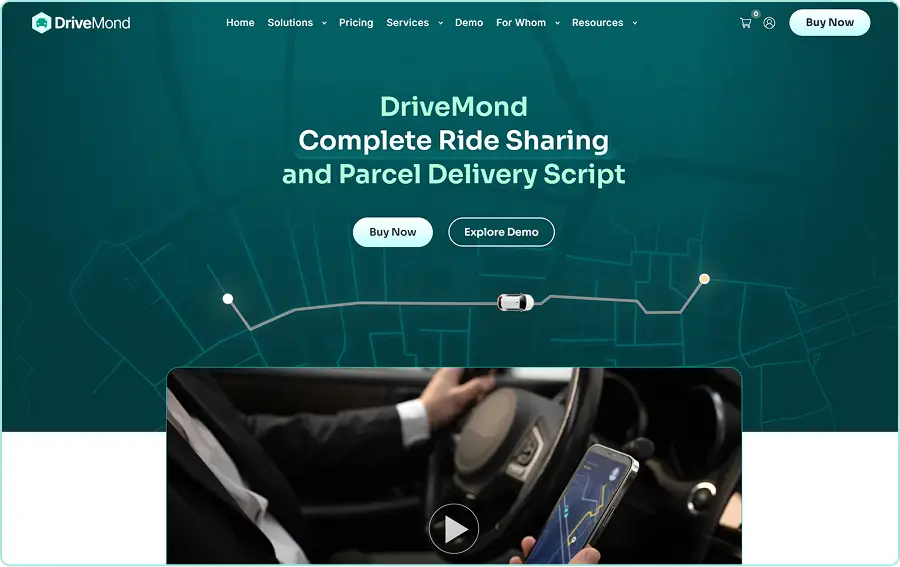
Building from scratch means developing rider and driver apps, trip matching, payment processing, fare rules, and admin tools before the first ride. This can take months and requires a full development team. Yet, as the earlier sections show, success depends more on recruiting drivers, establishing a presence in one city, and setting fair prices.
Ready-made software removes the development work, allowing new operators to focus their time and budget on launching the business.
The DriveMond package includes the core tools a ride-hailing business needs to get started.
- Admin panel
- Rider app
- Driver app
- Business website
DriveMond also includes configurable features that let admins apply many of the lessons from Uber’s business model without writing code.
- Zone-based setup: Set fares, vehicle types, and surge pricing rules for each zone to launch in a smaller area.
- Commission and fees: Configure trip commissions, VAT, and idle or delay fees from the admin panel.
- Surge pricing: Schedule time-based surge rules daily, weekly, or on custom dates for each zone.
- Fare bidding: Let riders suggest a fare and drivers respond with their own offers.
- Additional revenue streams: Use built-in parcel delivery, coupons, wallet bonuses, and referral features.
- Local payment methods: Accept cash, in-app wallet payments, and payments through gateways such as Stripe, PayPal, and bKash.
- Trust and safety: Use driver document and face verification, trip PINs, and a women-only ride option.
- Language and currency support: Configure multiple languages, including right-to-left scripts, and local currencies.
Here is a quick look at why starting with a ready-made system makes more sense than building a ride-hailing app from scratch.
DriveMond provides the technology from day one. This lets new operators focus on recruiting drivers and riders, helping them launch in weeks instead of months.
Recommended Reading:
Conclusion
Uber’s business model is simple at its core. It operates the marketplace, drivers provide the vehicles, and Uber earns a share of each completed trip without owning the cars used for rides. This structure shapes how Uber sets fares, pays drivers, and manages operating costs.
Over time, Uber has expanded the same network into other services. Its Delivery segment now generates steady profits, while subscriptions, advertising, and business accounts add revenue beyond individual rides. Freight, which still operates at a loss, shows that Uber’s marketplace model does not work equally well in every market.
For anyone looking to build a similar business, the technology is the easier part to replicate. Success depends on expanding one city at a time, giving drivers enough earning opportunities to stay, and setting fares that work for both drivers and riders.
Frequently asked questions
Who are Uber’s main competitors?
Uber’s competitors vary by region. Lyft is a major rival in North America, while Bolt competes across Europe and Africa. DiDi leads in China and operates in parts of Latin America. Grab competes with Uber across Southeast Asia, while Ola and Rapido are rivals in India. In food delivery, Uber Eats competes with DoorDash. Local apps such as inDrive, where riders can offer their own fares, add further competition in many markets.
Does Uber own any of its vehicles?
No. Every car belongs to the driver or a fleet operator. That means Uber can enter a new city without buying anything. It also means it cannot control the condition of the cars or how consistent the service feels.
What is the difference between gross bookings and revenue?
Gross bookings are the total amount customers pay, including taxes and fees. Revenue is what Uber keeps after drivers, couriers, and merchants are paid. Uber reports both because bookings show how much activity the platform coordinates, while revenue shows what the coordination itself earns.
Who are Uber’s main competitors?
Lyft in North America, DiDi in China, Grab in Southeast Asia, Bolt across Europe and Africa, and Ola in India, alongside conventional taxi operators in most cities. Uber also competes with autonomous vehicle operators running their own consumer apps, some of which are partners on its platform at the same time.
Can a startup copy the Uber business model?
Yes. A startup can use ready-made software like DriveMond to launch with core features similar to Uber, including rider and driver apps, trip matching, fare rules, and payment processing. The founder still needs to build a reliable network of drivers and riders, starting in one city before expanding to others.
What do you need to start a ride-hailing business?
You need a local operating license, commercial passenger insurance, payment accounts that support the methods riders use in your market, a pool of drivers ready for launch, and a platform to manage the service. Ready-made software like DriveMond covers the technology, leaving you to focus on licensing, insurance, payment setup, and driver recruitment.

Meet Shahebur Rasul, an electrical engineering graduate who chose to become a technical content writer. He loves to find concise insights from complex ideas. He uses his natural storytelling abilities to turn these insights into easy-to-understand content, even for non-technical people. When he is not writing, he watches or plays football.